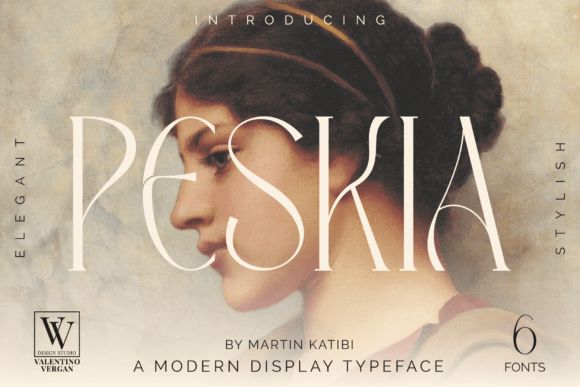
Peskia: A Modern Font for Sophisticated and Contemporary Design
Typography plays a crucial role in visual communication, influencing how information is perceived and experienced. Among the many fonts available today, Peskia stands out as a modern typeface that blends elegance with originality. Its tall and slim structure gives it a refined, contemporary aesthetic while also evoking a subtle sense of nostalgia. This makes Peskia particularly appealing to professionals, designers, educators, and anyone who values clarity and style in their content.
What Is Peskia?
Peskia is a sleek, sans-serif font designed for both digital and print use. It features clean lines, open apertures, and a balanced contrast between strokes, which enhances readability across various mediums. The font’s vertical emphasis and narrow proportions contribute to its sophisticated appearance, making it ideal for headlines, branding materials, editorial designs, and even user interfaces where space efficiency is key.
In the broader context of design and typography, Peskia fits into a growing trend of minimalist yet expressive typefaces. It bridges the gap between traditional serifs and ultra-modern geometric sans-serifs by offering a harmonious blend of formality and approachability. Whether used in marketing collateral or personal creative projects, Peskia ensures that the text remains legible without compromising on visual appeal.
Integrating Peskia Into Your Workflow
The integration of Peskia into your design process can be strategic, depending on the stage of your project. Before beginning any design work, consider whether Peskia aligns with your brand identity or the tone you want to convey. If your goal is to communicate professionalism with a modern edge, then Peskia could be an excellent choice.
During the execution phase, use Peskia for elements that require attention to detail and hierarchy. For instance, when designing a presentation or website layout, apply it to titles and subheadings to create a visual anchor that draws the eye. Its slim nature allows for more content to fit on a page or screen without overcrowding, which is especially useful in responsive web design or tight grid systems.
After completing a project, evaluate how well Peskia served its purpose. Did it enhance the overall message? Was it easy to read at different sizes? These observations will help you decide if and how to use it again in future workflows.
Branding and Marketing
For entrepreneurs and marketers, Peskia can serve as a cornerstone of brand identity. Its elegant form supports a polished look that resonates with upscale audiences. When creating logos, business cards, or social media banners, using Peskia in combination with complementary fonts—such as a softer serif for body text—can establish a strong typographic hierarchy.
A practical tip is to pair Peskia with neutral colors and ample white space to let the font shine. This approach works particularly well in luxury product packaging or high-end service websites where first impressions matter.
Editorial and Content Creation
Bloggers, publishers, and educators often need fonts that are both stylish and functional. Peskia can be used in blog headers, magazine covers, or even as a title font in e-books. However, due to its slim characteristics, it's best reserved for larger text sizes rather than long-form reading passages.
When implementing Peskia in content creation tools like Adobe InDesign or Canva, ensure that your settings accommodate its unique proportions. Adjusting leading and tracking slightly can make a big difference in maintaining a cohesive and readable layout.
Web and App Design
Developers and UI/UX designers might find Peskia beneficial for interface elements such as navigation bars, buttons, or modal titles. Its vertical orientation helps maintain a clean and structured layout, especially when working with limited horizontal space.
To implement Peskia effectively in web projects, confirm its compatibility with your chosen platform and test it across different devices. Using CSS to control font weight variations (if available) can further enhance the user experience by providing subtle tonal shifts in headings versus body text.
Workflow Optimization with Peskia
One of the key advantages of using Peskia is its ability to streamline visual workflows. Because of its distinct shape, it can quickly become a recognizable element within a design system, helping users identify important sections without confusion. This is valuable in environments where consistency and efficiency are top priorities, such as in productivity tools or internal company dashboards.
Here’s a sample workflow for incorporating Peskia:
- Define the Purpose: Determine if your design needs a bold, modern statement or a softer, nostalgic feel.
- Select Variants: Choose from available weights and styles (e.g., regular, bold, italic) based on your design requirements.
- Test Readability: Apply the font in real-world scenarios—on screens, in print, and across different color backgrounds—to ensure it remains legible.
- Build a System: Combine Peskia with other fonts to create a consistent typographic language throughout your project.
- Document Usage: Keep track of where and how you’ve used Peskia so that others on your team can follow suit and maintain design coherence.
Compatibility and Usability Considerations
Before finalizing Peskia for a project, assess its compatibility with your tools and platforms. Most modern design and publishing software support custom fonts through OTF or TTF formats. If you're developing a website, consider using WOFF or WOFF2 files for better performance and cross-browser support.
Usability should also guide your implementation. While Peskia may look stunning in a portfolio or brochure, it’s not always suitable for every part of the design. Use it judiciously—perhaps for section headings or call-to-action buttons—while relying on more conventional fonts for body copy to avoid overwhelming the reader.
Practical Tips for Long-Term Use
- Use sparingly: Avoid overusing Peskia in large blocks of text to preserve readability and reduce visual fatigue.
- Pair thoughtfully: Select secondary fonts that complement its vertical rhythm and contrast in stroke width or character spacing.
- Stay consistent: Define clear rules for when and how to use Peskia in your style guides to maintain a professional look over time.
- Optimize for accessibility: Ensure sufficient contrast against background colors and avoid using it in small sizes where legibility drops.
- Consider licensing: Verify that you have the correct license for commercial use, especially when deploying it across multiple platforms or clients.
By treating Peskia as a strategic design asset rather than just another font, you can maximize its impact. It becomes part of a larger visual narrative, contributing to a brand’s personality and enhancing the user experience through thoughtful placement and sizing.
Real-World Examples of Peskia in Action
Many successful brands and independent creators have adopted Peskia for specific applications. For example, a boutique clothing line might use it in promotional emails and window displays to evoke a timeless yet modern vibe. Similarly, a startup focused on tech innovation might feature it in app interfaces to signal sophistication and reliability.
Freelancers and bloggers can benefit from using Peskia in headers or pull quotes to highlight key points. It adds a layer of professionalism without being overly formal. When combined with photography or iconography, the font helps balance the composition, guiding the viewer’s attention effectively.
Quality Control and Consistency
Maintaining consistency is essential when using Peskia across different materials. Establish a naming convention for its usage—like “Peskia Bold for Titles” or “Peskia Regular for Subheaders”—to ensure everyone involved understands its role. This is especially important in collaborative environments where multiple contributors may be working on the same project.
Regular quality checks are also necessary. Review all deliverables before publishing or printing to confirm that the font renders correctly and retains its intended style. Differences in device resolution or operating system can affect how fonts display, so testing is vital to uphold a polished outcome.
Why Peskia Stands Out
While there are countless fonts to choose from, Peskia offers a unique combination of traits. Its modern minimalism appeals to current design trends, but its slight nod to classic forms makes it versatile enough for a wide range of industries. Unlike some ultra-thin or decorative fonts, Peskia maintains a level of neutrality that allows it to adapt to various contexts without losing its identity.
This dual capability—being both distinctive and adaptable—makes Peskia a valuable addition to any designer’s toolkit. It’s not just about aesthetics; it's about supporting a clear and effective communication strategy.
Conclusion
Peskia is more than a font—it’s a design tool that contributes to clarity, elegance, and efficiency. By integrating it into your planning, execution, and evaluation phases, you can elevate your projects with a typeface that speaks volumes. Whether you’re crafting a new brand identity, refining a website layout, or producing educational materials, Peskia offers a refined solution that aligns with both form and function.
Understanding how to use Peskia in harmony with other design elements ensures it enhances rather than distracts. With careful preparation, thoughtful application, and ongoing assessment, you can harness its strengths to improve your outcomes and create content that resonates with your audience.